
In some cases, we notice the core parts while ignoring the power behind them. The transmission equipped in your heavy-duty truck is a neglected power. Although the engine is widely regarded as the most essential part with its capacity to create energy, we shall also remember that the transmission is the part that decides how that energy is used.
In a truck, the transmission takes the spinning force from the engine and sends it through a system of gears. These gears help the truck move smoothly, even when it’s carrying heavy loads. There is no doubt that the transmission is not just a mechanical part: it’s the brain behind the muscle, turning raw energy into real motion.
Today, we invite you to learn important knowledge about modern transmission. Scroll down now to have a look and share the article with your friends or families in need.
Types of Transmission
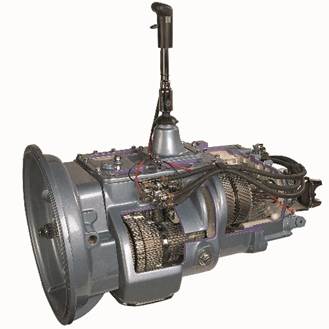
Manual Transmissions
A type of transmission requires the driver to shift gears using a clutch pedal and gear lever manually. It is preferred for off-road driving, towing heavy loads, and precise control. Regarding the fuel efficiency and performance, this type of transmission is simple but dependent on the driver’s skill for optimal fuel efficiency.
Types
- Range Transmissions: Fixed number of gear ranges, common in long-haul applications with consistent speed and terrain.
- Splitter Transmissions: Provide additional gear ratios within each gear range for applications like regional hauling.
- Range-Splitter Transmissions: Combine range and splitter features, offering flexibility for diverse applications, including construction.
Pros
- Greater control over gear selection.
- Preferred for off-road driving or towing heavy loads.
- Simple, reliable, and cost-effective.
Cons
- Requires skilled drivers and can be tiring, especially for long periods of shifting.
Automated Manual Transmissions (AMT)
AMT combines the control of manual transmissions with the convenience of automation; it utilises an onboard computer, sensors, and actuators to operate the clutch and shifter. Nowadays, AMTs are gradually gaining popularity for fleets due to ease of use, reduced fatigue, and improved fuel efficiency. It is also ideal for long-haul trucking, construction, and urban delivery. This transmission could offer fuel savings of up to 10% through automation and downsizing.
Pros
- Easier for new drivers to operate.
- Reduces fatigue and distractions compared to manual transmissions.
- Improved shift quality and longer clutch life.
- Fuel savings of up to 10% compared to older conventional transmissions (with extreme downshifting).
Cons
- Clutch activation can be less smooth in stop-and-go situations.
- May experience loss of momentum during shifts.
Automatic Transmissions
Automatic Transmissions use a torque converter and fluid coupling to transfer power without manual input from the driver. The Automatic Transmission is best for stop-and-go applications and those needing smooth, uninterrupted driving. Besides, they are suitable for vocational tasks like snow ploughing or heavy equipment operations. Compared with the above two transmissions, they are slightly less fuel-efficient due to complexity and the torque converter.
Types
- Planetary Automatic Transmissions: Uses planetary gearsets and torque converters for smooth operation and adaptability.
- Dual-Clutch Transmissions (DCT): Features two separate clutches for odd and even gears, enabling faster gear changes.
Pros
- Seamless power shifts and no need for constant manual shifting.
- Reduced transmission and clutch wear.
- Ideal for stop-and-go driving, like in snow ploughs or urban delivery.
- No driver fatigue due to the automatic shifting process.
Cons
- Higher cost and weight.
- Slightly lower fuel efficiency compared to manual and AMT systems.
Direct Drive versus Overdrive
Direct Drive
- Power flows directly through with a 1-to-1 relationship between input and output shafts.
- More fuel-efficient in low-speed, light-load situations, and flat terrain.
- Ideal for highway hauling with lighter loads.
Overdrive
- Has a faster output shaft speed than input rotation speed, providing torque multiplication.
- Better for vocational applications, off-road, or hilly terrain.
- More flexibility, enabling greater fuel savings with downspeeding.